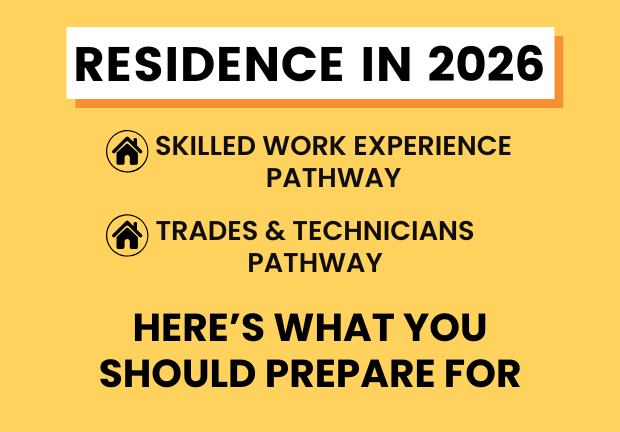
Skilled Migrant Category and new Residence Pathways - final changes released
25 June 2026Immigration New Zealand has just released the final details and long-awaited clarifications for the Skilled Residence changes taking effect on 24 August 2026, including the Skilled Migrant Category (SMC), Skilled Work Experience, Trades & Technician and Work to Residence pathways.
The overall news is very positive. Many migrant workers will now have greater certainty around their residence pathways, particularly around wage thresholds, work experience requirements and qualification settings.
However, the final details also introduce a number of technical requirements that could significantly affect eligibility. In some cases, applicants who appear eligible on the surface may face challenges due to evidence requirements, work experience timeframes, qualification requirements or the strengthened genuine employment rules.
What are the most important SMC changes to look out for?
Work Experience Timeframes Confirmed
- Relevant work experience must have been gained within the 10 years immediately before a residence application is lodged.
- Skilled work experience must be gained within a timeframe equal to twice the amount required.
New Skilled Work Experience Pathway – Requirements Confirmed
- Requires 3 years of relevant work experience.
- Requires an additional 2 years of skilled work experience in New Zealand in ANZSCO Skill Level 1–3 occupation.
- New Zealand work experience must be paid at least 1.1 times the median wage.
Self-Employment Work Experience not allowed
- Self-employed work experience cannot be used to meet the relevant work experience requirement under the Skilled Work Experience pathway.
- Self-employed work experience cannot be used to meet the relevant work experience requirement under the Trades & Technician pathway.
- INZ says self-employment can be difficult to independently verify, even where tax records are available.
Less NZ Work Experience Needed for Extra SMC Points
- 2 years of New Zealand work experience will now earn 3 points.
- 1.5 years of New Zealand work experience will now earn 2 points.
No Need to Meet Higher Wage Thresholds at Residence Stage
- Most applicants will only need to meet the wage threshold that applied when they started gaining eligible NZ work experience.
- Future increases to wage thresholds will not affect residence eligibility.
- Applies across SMC, Skilled Work Experience, Trades & Technician and Work to Residence pathways.
New 5-Month Grace Period
- A grace period will apply where wage thresholds increase between visa approval and starting work.
Trades & Technician Qualification Rules Confirmed
- Overseas qualifications must have an IQA and be assessed as Level 4 or higher.
- New Zealand qualifications must be Level 4 or higher and have a total of at least 120 credits.
Work Experience Evidence Rules Tightened
- Work experience claims must be supported by independently verifiable evidence.
- Evidence previously accepted for work visas may not be enough for residence applications.
Skilled Employment Rules Tightened
- Employment must be available and ongoing.
- Roles must have a genuine need to be based in New Zealand.
- INZ has strengthened the genuine employment assessment for skilled residence applications.
Qualification Evidence Requirements Clarified
Some applicants claiming points under SMC for Level 8 and Level 9 qualifications will now also need to provide evidence of a supporting bachelor's degree.
All changes taking effect from 24 August 2026
- New Skilled Work Experience Pathway.
- New Trades & Technician Pathway.
- Additional points available for some qualifications.
- Lower work experience requirements for extra SMC points.
- Changes affecting Tier 2 Green List, Care Workforce and Transport Work to Residence pathways.
- Draft SMC EOIs will be deleted on 24 August 2026
Planning Matters more than Ever
The migrants and employers who prepare early will be in the strongest position when the new residence pathways open.
Residence is not simply about meeting minimum criteria. Increasingly, successful outcomes depend on timing, workforce alignment, wage planning, qualification recognition, and long-term strategy.
With careful planning and informed guidance, many migrants will be well positioned to secure residence in New Zealand under these new pathways. Our team is here to help migrants and employers navigate these changes and prepare effectively for the opportunities ahead. Contact us for advice from our expert team of Licensed Immigration Advisers.

 Previous article