New Residence Pathways in 2026 - Here's what you should prepare for
25 May 2026The soon to open residence pathways – Skilled Work Experience pathway and the Trades and Technician pathway – have been highly anticipated by migrants in New Zealand.
From 24 August 2026, thousands of migrant workers who came to New Zealand to help address workforce shortages across multiple sectors, will have a clear opportunity to settle permanently through new residence pathways. This is also welcome news for employers seeking to retain skilled workers beyond the expiry of temporary visas.
What makes you eligible for the new pathways?
1. Skilled Work Experience Pathway
This pathway is designed for migrants working in ANZSCO Level 1–3 skilled occupations. Applicants must:
- Have at least 5 years of directly relevant work experience
- At least 2 of those years must be in New Zealand
- Earn a minimum of 1.1 times the SMC median wage during their NZ work experience
2. Trades and Technicians Pathway
Applicants must:
- Work in an eligible trades and technician occupation
- Hold a relevant Level 4 or higher qualification
- Have at least 4 years of relevant post-qualification skilled work experience
- Have worked at least 1.5 years in NZ earning at least the SMC median wage
What are the key challenges migrants and employers need to watch?
While these pathways create significant opportunities, they also introduce new complexities that migrants and employers will need to actively manage.
The Median Wage shift
The median wage will continue to apply for residence and when Job Checks are applied under twice median wage category. From 24 August 2026, for the Skilled Work Experience pathway, applicants must earn at least 1.1 times the median wage and those in occupations on the Amber List need to earn 1.2 times the SMC median wage.
Over the years, the median wage has steadily increased from $31.61 in 2024 to $33.56 in 2025 and is now at $35 per hour. From 24 August 2026, migrants only need to maintain the median wage they began working on - they do not need a pay rise at the time of residence application.
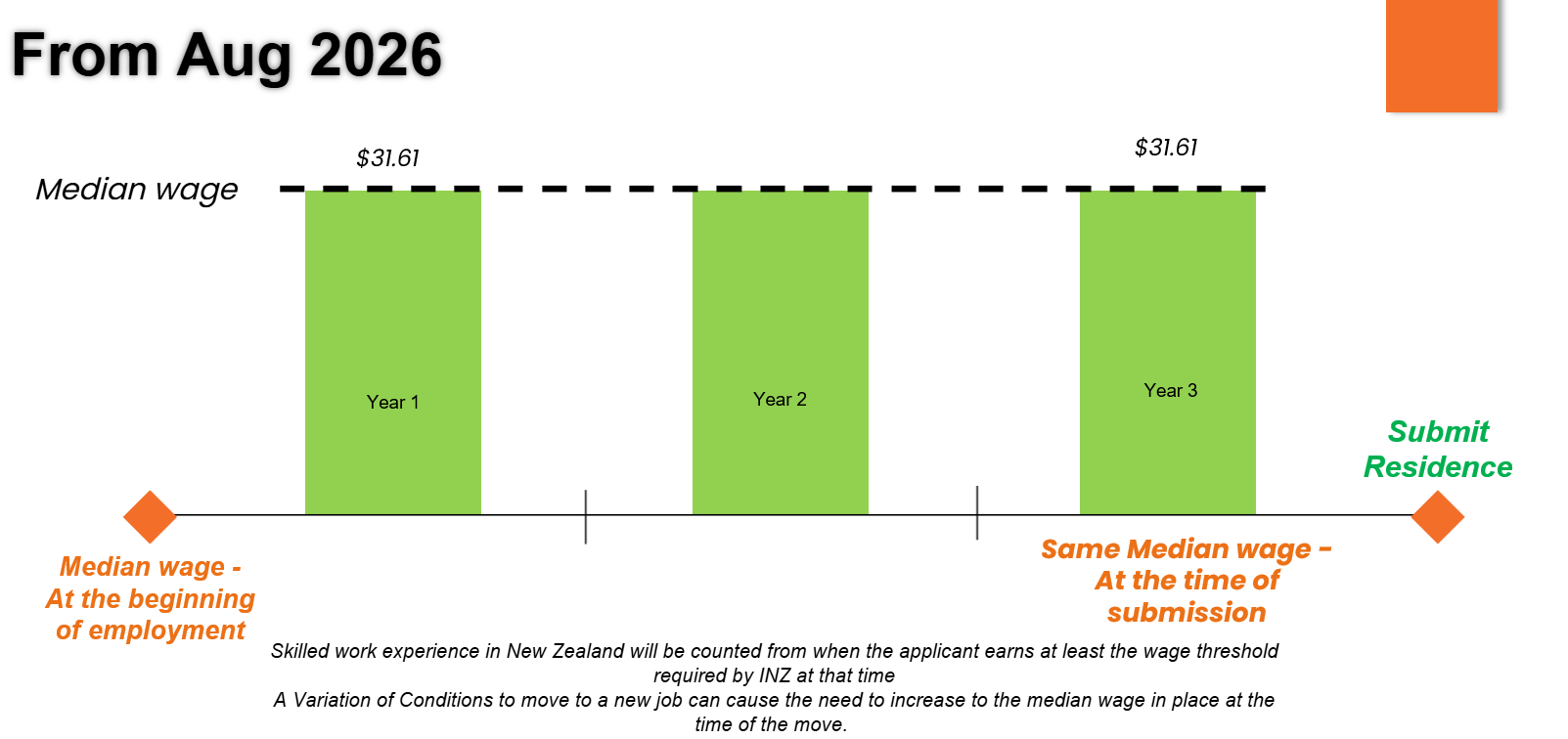
For both migrants and employers, proactive workforce and remuneration planning will be essential. Eligibility thresholds may continue to shift over time, making early preparation increasingly important.
Wage Assessment Timing
A ‘grace period’ will apply to the situations where the SMC median wage increases between a visa being granted and a migrant starting work. If the gap is 5 months or less, the wage threshold that applied on the day the visa was granted will be used.
Employers will need to monitor these timelines carefully to ensure workers are not unintentionally impacted if delays extend beyond this period.
Qualification Requirements for Trades & NZQA Assessments
The Trades and Technician pathway requires both a Level 4 or higher qualification and at least four years of relevant post-qualification work experience. This is likely to place additional pressure on NZQA’s International Qualification Assessment (IQA) system, so migrants may want to begin their qualification assessments as early as possible.
At the same time, questions remain around experienced tradespeople who may not hold formal Level 4 qualifications despite significant industry experience. Without alternatives, some skilled workers may still struggle to qualify under the new framework.
The AEWV Five-Year Limit and extensions
Some migrants may face another challenge: reaching the end of their Accredited Employer Work Visa (AEWV) before they meet residence requirements. Immigration New Zealand has confirmed that a new AEWV extension pathway is planned for 2027, allowing eligible migrants up to an additional 12 months to complete residence requirements.
However, until this extension becomes available, some migrants approaching visa expiry may still face uncertainty.
Read FAQs on the AEWV Five-Year Limit and Maximum Continuous Stay here.
English Language Testing and Validity
English language requirements will continue to play a critical role in residence eligibility. From late August 2026, for applicants holding recognised occupational registration - English language test results will remain valid for five years. For all other applicants, test validity will remain at two years.
For many migrants, achieving the required English score remains one of the biggest barriers to residence. Without early preparation, applicants risk meeting every other criterion but being unable to proceed due to English language requirements.
To support migrants, their families, and employers, we have introduced partnerships focused on English language learning and testing support, helping applicants better prepare for these new pathways. Contact us to learn more.
Roles on the Red List
Occupations on the red list are not eligible for the 2 new pathways. Occupations on the Red List include:
- Hospitality, Retail and Service manager Nec
- Retail manager
- Beauty therapist
- Massage therapist
- Hairdresser
- Hair and beauty salon manager
Migrants in these occupations may still be able to apply for residence under alternative options. However, these options should be assessed as early as possible to avoid their visa expiry acting as a full stop on their time in NZ. Studying in NZ or changing to partnership-based visas is a viable option for some in this position.
Roles on the Amber List
Occupations on the amber list must meet higher eligibility requirements to be eligible for the new Skilled Work Experience pathway, including:
- 5 years of relevant eligible work experience in New Zealand
- 2 years of skilled work experience earning at least 1.2 times the SMC median wage
Migrants working in these occupations are also still eligible for the existing SMC 6 Point pathway. Occupations on the Amber List include:
- Accommodation and hospitality manager
- Hotel or Motel Manager
- Hotel Service Manager
- Bed and Breakfast operator
- Caravan Park and Camping Ground Manager
- Café/restaurant manager
- Baker
- Pastrycook
- Chef
- Customer service manager
- Office Manager
- ICT Customer Support Officer
- ICT Support Technician
- Web Administrator
Planning Matters more than Ever
The migrants and employers who prepare early will be in the strongest position when these pathways open.
Residence is not simply about meeting minimum criteria. Increasingly, successful outcomes depend on timing, workforce alignment, wage planning, qualification recognition, and long-term strategy.
With careful planning and informed guidance, many migrants will be well positioned to secure residence in New Zealand under these new pathways. Our team is here to help migrants and employers navigate these changes and prepare effectively for the opportunities ahead. Contact us for advice from our expert team of Licensed Immigration Advisers.

 Previous article