AEWV Maximum Continuous Stay: Critical Changes Affecting Migrants and Employers
08 December 2025Confused about how long someone can actually stay in New Zealand on an Accredited Employer Work Visa (AEWV)? You’re not alone — this is one of the most common questions we’re seeing from both migrants and employers right now.
Immigration New Zealand recently sent out emails advising that many AEWV holders are now approaching their Maximum Continuous Stay (MCS), meaning they may soon need to leave New Zealand, creating a real sense of urgency. The potential impact is significant for migrant workers who may have uprooted their lives and built their future here over the past three years, as well as for employers who now risk losing trained staff and may have to start recruitment from scratch.
With shifting wage thresholds, new residence pathways, and evolving job classifications, understanding the AEWV “maximum stay” rules has never been more important.
To cut through the noise, we’ve put together a straightforward set of FAQs that outline the limits, what affects them, what options exist after reaching the limit, and what you need to plan for before it’s too late.
Q: What does Maximum Continuous Stay (MCS) mean?
It’s the total amount of time you can spend in New Zealand on one or more AEWVs before you must leave NZ for 12 months to become eligible for another AEWV. All time spent on an AEWV accumulates toward this limit and it can also include time on an Interim Visa or Specific Purpose work visa.
Q: What is the duration of Maximum Continuous Stay (MCS) on an AEWV?
- Most workers can stay up to 5 years, depending on their role and pay rate.
- Some lower-skilled or lower-paid roles are capped at 3 years.
- A select few AEWV’s may be eligible for 5 years regardless of the skill level of the role, this depends mainly on when they applied.
Q: What determines whether the Maximum Continuous Stay limit is 3 years or 5 year?
INZ will assess a role against:
- The occupation’s skill level under ANZSCO/NOL
- The hourly pay rate
Generally, ANZSCO Level 1–3 roles qualify for 5 years, while lower-skilled roles (level 4 & 5) may have a 3-year limit. There are some exceptions to this, so it pays to check.
Q: Can you apply for another visa to extend your stay?
Yes, but only if you have not yet reached your MCS or have a job offer in a higher skilled role.
Q: What happens you reach the Maximum Continuous Stay limit?
You must leave New Zealand for 12 consecutive months before applying for a new AEWV.
Employers cannot legally continue to employ someone once they hit their limit. Remaining in employment after reaching the limit breaches visa and accreditation conditions.
Q: Does time on other visas count towards the AEWV Maximum Continuous Stay limit?
Yes, time spent on Interim visas or Specific Purpose Work Visas can also count towards MCS.
Q: Will changing to a higher skilled affect Maximum Continuous Stay?
Yes, it may. If you move into a qualifying higher-skilled role (for example an ANZSCO 1, 2, or 3 role), your total AEWV limit may increase to 5 years. INZ will re-assess your role and eligibility when you apply for the new visa.
Q: Where can you check how much AEWV time you have left?
INZ has an official online tool that shows:
- How much AEWV time you have used
- How much AEWV time remains
- Whether you are nearing MCS
We can also so this check and interpret the result for you. Contact us for assistance.
So, what are the options for migrants facing their Maximum Continuous Stay limit?
Reaching the Maximum Continuous Stay does not always mean the journey in NZ ends. There are several strategic pathways they may still be eligible for — and we can help assess what is viable.
1. Apply for the 'Balance AEWV' with another role (if eligible)
You may be able to stay longer if you are able to get another role that meets the 5-year AEWV criteria, which typically requires:
- A role at ANZSCO level 1 - 3, and / or
- A higher pay rate that meets INZ's skilled threshold
We can assess your potential new occupation, proposed role, and pay rate to determine whether a balance AEWV is possible.
2. Check if you are eligible for any extra time using your current role
Many AEWV holders who have been in NZ for at least 2 years may be eligible for extensions to their visas based on their current roles. This can be difficult to work out alone so don't hesitate to check with us if you or your employee can get more time.
3. Upskill through studying in New Zealand
If a higher-skilled job is not immediately available, studying may provide a practical alternative. This can lead to:
- A Student Visa
- Post-study work rights (depending on the qualification)
- A pathway into a higher-skilled job later
Not all courses lead to post-study visas, so choosing the right qualification is critical. We can advise on what type of study will be most beneficial for your long-term goals. You can read FAQs on studying in New Zealand here.
4. Explore partner based visa options
If you have a partner or spouse in New Zealand — whether on a work / student / resident visa or as a citizen — you may have pathways available through them.
These can sometimes allow you to remain in NZ without the 12-month stand-down period.
5. Consider Residence Pathways
Some individuals may already meet, or be close to meeting, the requirements for Residence Pathways such as:
- Skilled Migrant Category
- Green List residence
- Care workforce residence
- Transport sector residence
- Highly Paid residence
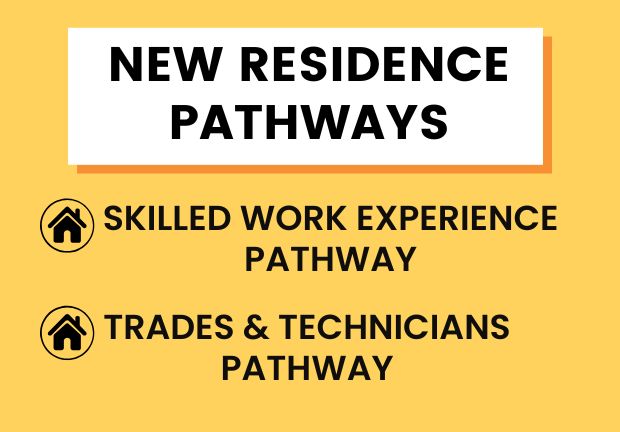
In addition, two new Skilled Residence Pathways are being introduced in 2026.
If residence is an option, it removes the Maximum Continuous Stay issue entirely.
We can support you through this.
Our team can support both migrants and employers through this transition by helping determine how much AEWV time remains, assessing whether a new role could extend your stay, advising on suitable study pathways, exploring partner-based options, or identifying potential residence pathways. We work with you to create a clear, practical immigration strategy so you can make informed decisions and avoid unnecessary disruptions to your plans or business operations. Don't hesitate to reach out to our friendly team.


 Previous article