Immigration in 2026: A tightening landscape employers need to navigate carefully
15 January 2026A familiar cycle for those who have seen it before
For those who have been in this space long enough, the current environment will feel familiar. It reflects a phase we’ve seen before, when Immigration New Zealand (INZ) tightens settings and applies policy far more strictly.
When this happens, scrutiny increases across the board. Officers ask more questions, decisions can appear inconsistent, and requests for information become more frequent. This is also often the point where officers begin questioning matters which were previously accepted without issue.
That is very much the space we are in again, hence a word of caution. The tightening of settings is not limited to migrant applicants. Employers are very clearly in focus.
Previously accepted does not mean permanently accepted
One of the key things employers need to be mindful of is that prior acceptance does not guarantee future acceptance.
We are seeing Accredited Employer Work Visa (AEWV) renewals where Immigration is revisiting and verifying documents which were previously approved without question. Officers are checking information again, sometimes in far greater detail.
If something sat in a grey area previously, it is far more likely to be scrutinised now.
Post-accreditation checks are becoming far more active
INZ is currently taking a strong approach to post-accreditation checks. These are not procedural or passive reviews.
We are seeing retrospective reviews of Job Checks, verification of declarations made by employers, and cross-checking of information with third parties.
For example, where employers declared engagement with Work and Income (WINZ) for lower-skilled roles, INZ is now confirming directly with WINZ whether that engagement actually occurred. Where declarations do not align with reality, the consequences can be serious, including suspension or revocation of accreditation.
Approval does not equate to immunity.
Employment agreements and increased focus on bond and deduction clauses
Employment agreements are another key pressure point.
Following changes to job check forms late last year, employment agreement templates were removed from the job check stage and pushed to the AEWV stage. While this appeared to streamline the process, it has shifted scrutiny further down the line and created confusion.
Employment agreements are now often first assessed at the AEWV stage, where officers compare the job check, the visa application, and the employment agreement together. When these do not align, issues arise.
This risk is heightened where different parties are involved. Job checks are often completed by the employer or their Licensed Immigration Adviser (LIA), while the AEWV application is handled by the migrant or their LIA. As job check approval letters do not set out full details, it can be difficult to confirm what was originally declared unless someone has access to the job check application itself.
Bonding, deduction, and travel clauses are receiving particular attention. Immigration is asking more detailed questions around what is being bonded, what costs are included, how deductions are calculated, and whether these comply with employment law. RFIs in this area are increasing in both frequency and complexity.
Market rate scrutiny continues to tighten
Market rate has always been a key consideration, but the level of scrutiny has increased significantly.
Officers are taking a harder line on whether remuneration genuinely reflects the role, the skill level, and the region. Roles that sit between entry-level and senior are particularly vulnerable, and employers are increasingly expected to justify pay rates with evidence rather than assumptions.
If you have applied for a job check and INZ has raised concerns around market rate, you are often left in a difficult position. You can read more about what options may be available here.
Major policies come into effect mid year
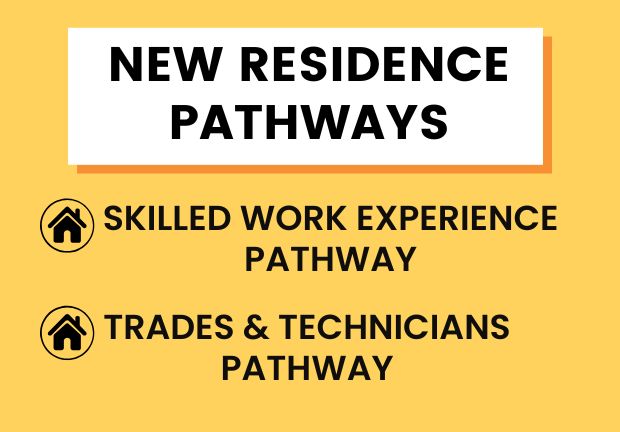
As part of the Going For Growth programme, last year the Government announced a raft of immigration policies which come into effect in August. The changes include new residence pathways, refining the AEWV and greater immigration benefits for international students studying here. You can read more about these policies here.
An election year adds another layer of uncertainty
This year also brings an additional factor employers should be mindful of: it is an election year.
Historically, election years bring policy announcements, shifts in direction, and operational changes, often with limited notice. July and August are typically periods when new immigration settings or priorities are announced.
When this happens, officers may begin interpreting policy differently, processes can change quickly, and outcomes may differ from what employers have previously experienced. Surprises are not uncommon in election years.
It is therefore critical to ensure you have the right support to understand how these changes affect you and your workforce. This is where staying informed through our newsletters or registering for our webinars can make a real difference.
What employers should take away from this
The key message as we head into the year is simple: immigration is no longer forgiving of loose processes or inconsistencies.
Gone are the days when historical approvals could be relied upon or inconsistencies overlooked. Even where something is approved today, it may be questioned later.
This is why it is more important than ever that accreditations, job checks, and work visa applications are handled by people who understand not just the policy, but the risk environment around it.
If you manage job checks in-house, that’s fine. Just make sure you have reliable support when needed. Don’t second-guess critical decisions.
Immigration is tight. Officers are under pressure. And when systems tighten, precision matters.
If there is one theme for the year ahead, it is this: do it properly the first time, because you may be asked to prove it later.
Have questions? Join our first webinar of the year on 12 February 2026, designed exclusively for employers, HR professionals and recruiters. During the webinar, our Senior Advisers break down complex immigration policies into practical, actionable points helping you retain and hire skilled migrant talent.

 Previous article